
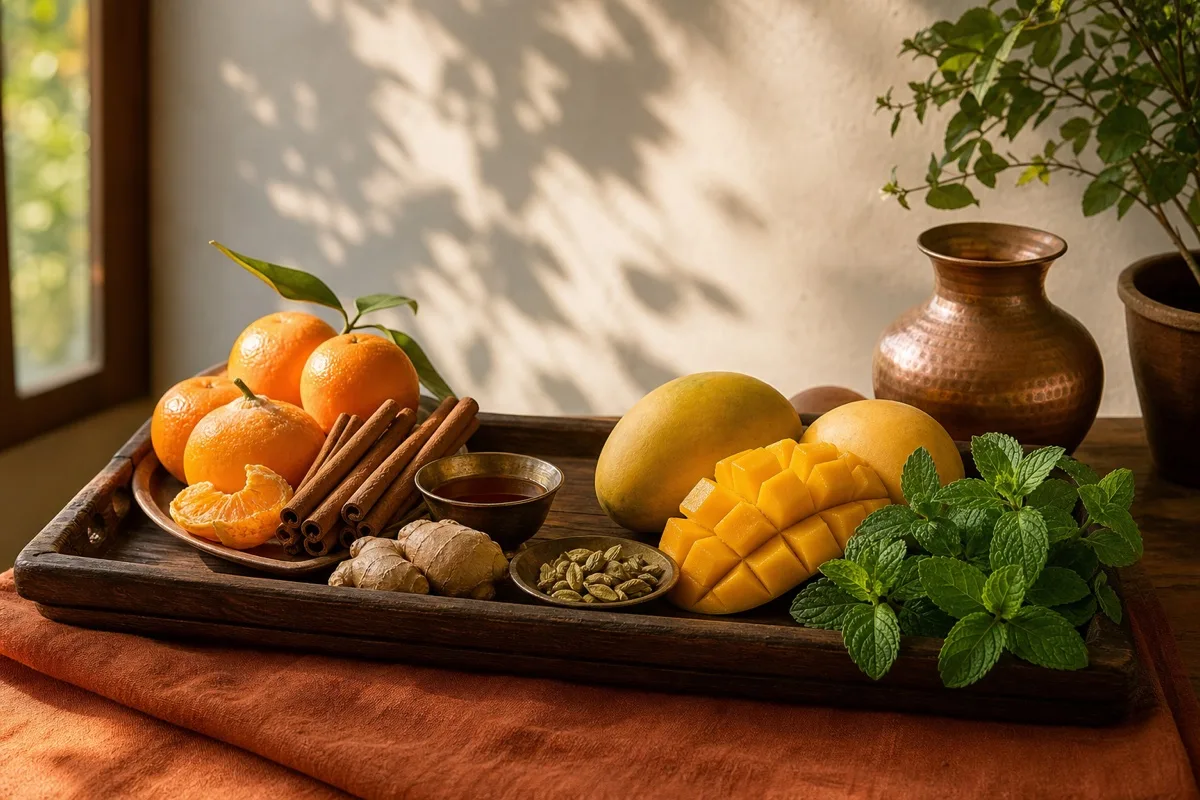
Ritucharya is the seasonal counterpart to dinacharya: the practice of shifting diet, sleep, and daily rhythm as the year moves through its qualities, rather than running one fixed routine for all twelve months. A morning routine that suits a cold, dry winter can quietly work against you in a hot, humid summer. Ritucharya is the adjustment layer that keeps dinacharya actually working year-round.
Why one routine does not fit every season
Ayurveda groups the year into seasons dominated by shifting combinations of vata, pitta, and kapha qualities. Broadly, a drying and mobile late autumn into winter, a heating summer, and a heavy, damp monsoon or early spring. Each season tends to aggravate a different dosha, so the food, exercise intensity, and sleep timing that kept you steady three months ago may need real adjustment now, not just willpower to "stick with the plan."
Cold, dry seasons: build warmth and steadiness
As the air turns cold and dry, vata tends to rise. Favor warm, cooked, slightly heavier meals, regular oiling, and a consistent sleep and wake time. This is a season where irregular schedules and skipped meals cost more than usual: the body has less natural buffer against dryness and disruption.
Hot seasons: cool the fire before it overheats you
As temperatures climb, pitta tends to rise. This is the season to moderate spice and intensity, add more cooling foods, and protect downtime rather than filling every hour. Irritability, acidity, or a short fuse in summer is often pitta responding to heat and overcommitment rather than a character flaw to manage away.
Damp, heavy seasons: keep kapha from settling
During monsoon or a damp early spring, kapha tends to accumulate. Lighter meals, more movement, and variety in routine help counter the natural pull toward heaviness and low motivation this season brings. This is often the easiest season to under-adjust in, because the sluggishness feels gradual rather than sudden.
Bringing ritucharya into a routine you already have
You do not need to rebuild dinacharya from zero each season, usually two or three targeted shifts (meal timing, food temperature, activity level) are enough to keep the same daily structure working as the year turns. The seasons also intersect with panchang and timing considerations from Jyotish, which is why many clients revisit their routine at each seasonal transition rather than only once a year.
A private Ayurveda session can map the adjustments that fit your climate and constitution at the season you are actually in. Book a consultation, or check the daily panchang for a sense of the day's quality as the season shifts.